
COLUMBIA, Mo. – Italian ryegrass is another new weed to watch in Missouri, says University of Missouri Extension state weed scientist Kevin Bradley. Also called annual ryegrass, Australian rye grass or Australian rye, the grass is commonly used for erosion control, as a quick-growing cover crop and as forage.
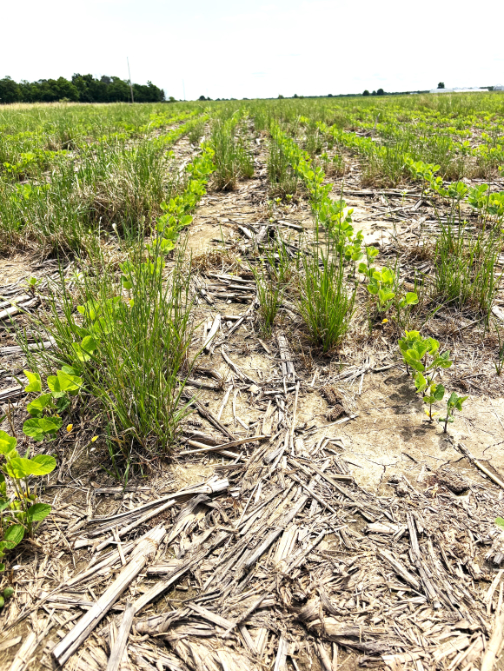
Missouri’s new weed to watch is Italian ryegrass a quick growing plant that is showing increasing resistant to herbicides, says MU Extension weed scientist Kevin Bradley. Photo courtesy of Kevin Bradley.
This quick-growing plant is becoming hard to kill and increasingly resistant to herbicides, Bradley says.
Bradley and colleagues in Mississippi, Kentucky, Tennessee and Arkansas are warning producers about its resistance to products like glyphosate and Group 1 herbicides, including clethodim, quizalofop and others.
It can become invasive, especially in corn, soybean, winter wheat and other small grain crops. It can reduce corn yields by 65%, cotton yields by 85% and soybean yields by 37% in field trials, according to Italian Ryegrass Management in Soybeans, published by the Take Action Herbicide-Resistance Management group.
Italian ryegrass germinates in as little as 6-10 days when daytime temperatures range from 50-86 F. It grows vigorously in winter and early spring, becoming a fierce competitor for nutrients, water and sunlight. It escapes cultivation, growing along roadsides, in lawns and in crops, making control more difficult.
While similar to perennial ryegrass, this species is an annual with seed that can germinate at multiple time points in the spring. It also grows taller – 2 to 3 feet high – in a bunch with numerous long, narrow and stiff leaves near its base. Leaves are glossy and sometimes have a purple tint.
It thrives in dark, rich soils in regions with mild climates. It does not withstand hot, dry weather and severe winters, according to the USDA, but it can tolerate wet soils with good surface drainage.
Weed scientists across the United States have documented Italian ryegrass with resistance to up to six different herbicide modes of action, including glyphosate, glufosinate, paraquat and ACCase inhibitors (Group 1 herbicides). Resistance to two or three modes of action is not uncommon in the U.S., Europe and South America.
Recommended management strategies include:
- Crop and herbicide rotation.
- Narrow row spacing, which allows crop to develop canopies to slow its growth as a cover crop.
- Fall tillage followed by early burndown with at least two effective postemergence herbicide modes of action.
For more information, download “Italian Ryegrass Management” at https://muext.us/MX1128.
Find additional resources at https://growiwm.org/take-action-home.