
COLUMBIA, Mo. – University of Missouri Extension’s weed science team is working on ways to understand and eradicate the millions of weed seed buried in every acre of U.S. cropland, especially seeds of highly invasive, herbicide-resistant weeds like waterhemp and Palmer amaranth.
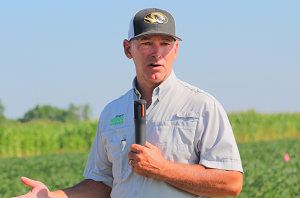
Only 5%-10% of these buried seeds germinate and emerge each year, but that small percentage can mean big yield losses, says Kevin Bradley, head of the Mizzou Weed Science team.
Although most weed scientist talk about reducing the weed seed bank of croplands, very little information actually exists about the density and diversity of weed seeds in these areas, Bradley says.
Current weed bank research, conducted in cooperation with MFA Inc., involved collecting soil samples from fields across 29 Missouri counties last fall, freezing and thawing the samples for 4-6 weeks and then spreading them across potting soil in greenhouse flats.
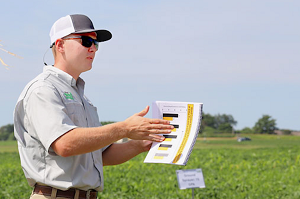
Jesse Yount, senior research specialist, leads the charge on the multiyear project.
To date, Yount has found 52 different weed species. Common winter annuals include henbit, purslane speedwell, chickweed, shepherd’s purse and field pennycress. Waterhemp is the most common summer annual found in the samples so far, at an average density of 73 plants in just one square foot.
Waterhemp remains a formidable foe in the war against weeds, reducing soybean yields by up to 44%. Waterhemp seed makes up for its tiny size with large numbers that are increasingly resistant to herbicides, dodging pre-emergence applications and still flourishing after post-emergence applications of non-residual herbicides such as glyphosate, glufosinate and 2,4-D. It also remains viable in the soil for years.
For more information, see Bradley’s Waterhemp Fact Sheet at https://extension.missouri.edu/publications/mx1123
Bradley notes that the results are from the first year of sampling only; soil sampling will continue this fall. Those interested in participating in the survey are encouraged to contact Bradley for more details.