
Memorial Hospital has purchased two new LeadCare II Blood Lead Analyzers to make lead testing easier and more convenient. One device is located in the Memorial Hospital Laboratory, and the second is available through the Chester Clinic Lab.
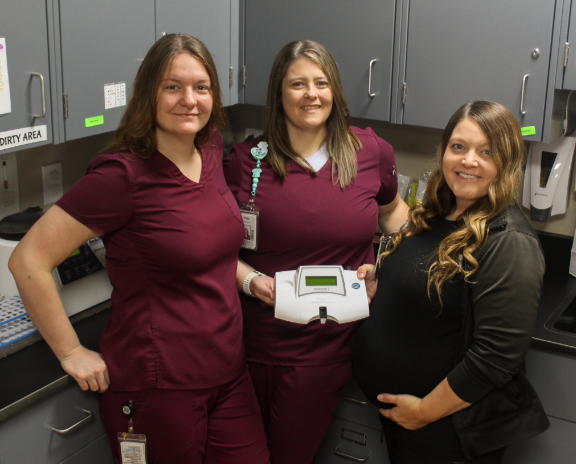
Rural Health Clinic laboratory staff pose with new testing device. L-R Emalie Chausse, Kelly Rhoades, and Jennifer Donjon
The new equipment allows Chester Clinic and Memorial Hospital to offer lead testing with a simple finger stick instead of a traditional blood draw from a vein. This smaller sample collection is less invasive and may help make testing a more comfortable experience for young children and their families. Results are available on the same day, allowing healthcare providers to quickly share the results and discuss any recommended follow-up.
This service is especially important following the Illinois testing requirement that took effect on July 1, 2026. Under the new statewide requirement, all children must receive a blood lead test at 12 months and again at 24 months of age, regardless of where they live or whether they are considered at higher risk. Children ages 6 and younger must also be evaluated for possible lead exposure using a questionnaire completed by a healthcare provider.
“Making same-day lead testing available close to home helps families complete this important screening with fewer barriers,” said Jennifer Donjon, Lead Lab Rural Health Clinic Phlebotomist. “This new equipment supports Memorial Hospital’s commitment to providing timely, convenient care while helping protect the health of our community.”
Lead exposure is especially concerning for young children because their brains and bodies are still developing. It can affect learning, behavior, growth, and development. Many children with elevated blood lead levels do not appear sick, making testing the only way to know whether exposure has occurred. The Illinois Department of Public Health emphasizes that there is no safe level of lead in the blood.
Lead can be found in many places, including dust, soil, older paint, drinking water, imported products, some toys, pottery, spices, and traditional remedies. Young children can be exposed when lead-contaminated dust or soil gets onto their hands and then into their mouths. Families can help reduce risk by washing children’s hands and toys frequently, using safe practices during home repairs, keeping children away from peeling or damaged paint, and speaking with a healthcare provider about possible sources of exposure.
A quick test can lead to quicker action. If a child has an elevated lead level, the healthcare provider can discuss next steps and coordinate with public health officials when needed. Follow-up may include identifying the likely source of lead and providing education and support to prevent additional exposure
By offering a simpler, less invasive finger-stick test with same-day results, Memorial Hospital is making it easier for families to complete this important screening. Parents and caregivers can feel confident knowing that this small step can provide valuable information about their child’s health and help identify lead exposure as early as possible.