

As we approach this summer’s 250th anniversary of the Declaration of Independence, we are invited to pause, reflect, and recommit to the ideals that laid the foundation for a new nation. In this spirit, let us renew our commitment to liberty, equality, and the rule of law so eloquently expressed in the Declaration of Independence.
Each of us recognizes the Declaration’s enduring words – “We hold these truths to be self-evidence, that all men are created equal, that they are endowed by their Creator with certain unalienable Rights, that among these are Life, Liberty and the pursuit of Happiness.” This poetic expression of liberty and equality defines us as a nation and as a people, but these unalienable rights remain aspirational for many Americans long after these words were penned in 1776.
In 1821, Missouri gained statehood as a slave state under the Missouri Compromise. During our early history, many enslaved people who had lived in free territories before being brought to Missouri filed “freedom suits” to be declared free.
One was Dred Scott, who sought a legal declaration that he was entitled to be released from the bondage of slavery. While enslaved, Scott had been taken to free territory in Illinois and Wisconsin before being brought to St. Louis. At the time, Missouri’s legal precedent long had respected the laws of other states, so taking an enslaved person to a free territory resulted in the person’s emancipation. In 1846, Dred Scott filed his freedom suit in the St. Louis circuit court. Following the law of “once free, always free,” a jury ruled in favor of Scott, and the circuit court entered judgment declaring Dred Scott a free man.
Dred Scott’s case was appealed to the Supreme Court of Missouri. Judge William Scott announced the Court’s decision – Dred Scott must remain a slave. In reversing the circuit court’s judgment, he declined to follow Missouri’s longstanding precedent, finding circumstances had changed and it no longer “behoove[d]” Missouri to “follow the path” of other states.
Chief Justice Hamilton Gamble dissented. He believed the Court should follow existing law and recognize Scott’s freedom. Addressing the “temporary public excitement” over the issue of slavery, Gamble wrote: “Times may have changed, public feeling may have changed, but principles have not and do not change; and, in my judgment, there can be no safe basis for judicial decision, but in those principles which are immutable.”
Undeterred, Dred Scott continued to pursue his freedom in the federal courts, but he fared no better at the United States Supreme Court.
In May 1857 – more than 11 years after Dred Scott began his legal quest for freedom and two months after the United States Supreme Court ended it – the person who held Scott in slavery set him free.
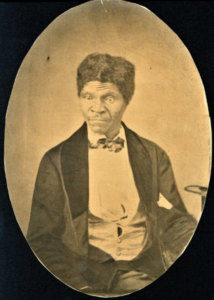
Image of Dred Scott, as shown in an 1857 daguerreotype by J.H. Fitzgibbon (courtesy of the Missouri Historical Society, St. Louis):
Dred Scott died in November 1858 in St. Louis, not even 18 months after his emancipation. But his legacy remains. A memorial now stands outside the St. Louis civil courts building in honor of Dred Scott and all the individuals who sought their inalienable rights through freedom suits. I encourage you to learn more about this chapter of our history through the Freedom Suits memorial website.
As a judge, I often wonder how our collective history might have been different had Chief Justice Gamble been able to persuade his colleagues that courts never should abandon the principles of law and justice, which remain immutable even – and especially – when the result they require is unpopular.
During our state’s 200th anniversary in 2021, our Missouri General Assembly took steps to right this wrong. Through a concurrent resolution, legislators unanimously declared “the March 22, 1852, Missouri Supreme Court Dred Scott decision is fully and entirely renounced.” Through their action, our legislators sent a clear, unified message rejecting the injustice Dred Scott faced and recommitting to the principle of equal justice under the law.
I doubt Dred Scott ever could have imagined the impact his case has had on our nation. He was merely turning to the courts for a legal remedy: to enjoy the inalienable rights proclaimed in the Declaration of Independence. But his courage and determination were dauntless, and his legacy of hope and possibility lives on for all the generations who follow.
In fact, a century later, in March 1956, Judge Theodore McMillian, another St. Louisan – and the great-grandson of a slave – became Missouri’s first African-American state court judge, perhaps not ironically in the same circuit court that so long before had granted Scott’s freedom suit. Judge McMillian later became the first African-American judge on our state’s appellate court and, upon his 1978 appointment to the United States Circuit Court of Appeals for the Eighth Circuit, the first African American to serve as a federal judge at any level within the seven states comprising the circuit. Throughout his career, Judge McMillian was deeply committed to law, justice, and the people both are designed to serve. His dedication and perseverance paved the way for countless others to find success across both the public and private sectors.
As the stories of Dred Scott and Theodore McMillian illustrate, the Declaration of Independence’s promise of equality is profound, but it is not ensured. As declared, equality is self-evident … but not self-enforcing. Each generation must seek to protect the ideals so courageously declared in 1776.
I hope you will join me in doing all you can to ensure the enduring words of our Declaration are reflected in the lives of all Missourians today, and into the future as we continue our pursuit of a more perfect union.