
April is National Gardening Month.
COLUMBIA, Mo. – Of all the things growing in a garden, children are the most important. April is National Gardening Month and an ideal time to discuss the need to teach youngsters about what unfortunately is becoming a lost art, said University of Missouri Extension horticulturist David Trinklein.
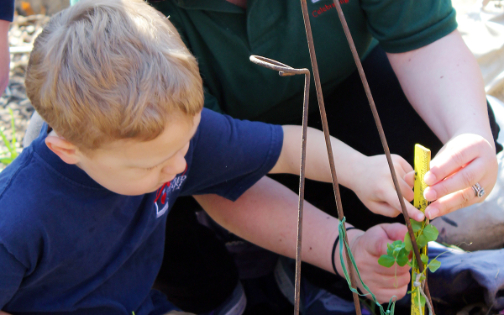
“The benefits of encouraging a child to plant their own garden are numerous, long-lived and transformational,” said Trinklein.
Gardening is an excellent way for children to explore nature and the plant world through hands-on learning, he said. Gardening encourages creativity and self-discipline while leading to a sense of accomplishment and self-worth.
Additionally, children who grow their own vegetables in a garden have been found to consume more of them. “The result is a healthier diet and more active lifestyle,” said Trinklein. “In short, there is no better way for children to grow than to plant a garden.”
Trinklein offered some suggestions on making a child’s first gardening experience a success.
Set realistic goals
When working with children, it is important to establish attainable goals. Therefore, don’t overdo it when involving them with gardening for the first time. Even a relatively small plot planted with a mix of flowers and vegetables can instill not only an appreciation of nature but also provide a place for fun learning activities.
Choose easy-to-grow plants
Carrots, radishes, lettuce and tomatoes are good vegetables to consider. If space permits, consider planting a pumpkin whose fruit can be used at Halloween. This can make the garden experience last a little longer.
Choose annual flowers
When choosing flowers for a child’s garden, select annuals that are relatively easy to grow. Be sure to include at least a few that can be used as cut flowers for the home or for special gifts. Zinnias, marigolds, celosia and sunflower are a few species worth consideration.
Choose large seeds
When establishing plants by directly seeding them in the garden, select species with relatively large seeds, which are easy to handle (e.g. beans and sunflower).
Personalize the experience
Children take special pride in having something that is their very own. Consider placing a sign in a child’s garden that lists the child’s name (such as “Emma’s Garden”). For real personalization, make plant labels that say, “Emma’s beans,” “Jacob’s zinnias,” etc. Such labeling promotes a sense of ownership and responsibility in children.
City families can still create meaningful gardening experiences for children, even without an outdoor garden plot.
Vegetables and flowers can be successfully grown in pots and containers. A container garden on a balcony, patio or deck can produce a lot of flowers and vegetables, and it often makes the task of tending plants easier.
The miracle of watching a plant emerge from a seed is a process that fascinates most children, Trinklein said. Colorful pictures help children imagine what will eventually grow where the seeds have been sown.
Keeping weeds in check is a bit more of a challenge. It can be difficult at first to tell small garden plants from small weeds. Therefore, allow plants to grow a little before showing youngsters the difference. Characterize weeds as “bullies” that want to take food and water away from the “good” plants.
Gardening also provides an opportunity for parents to talk with their children. Of course, talking about how plants grow, and other aspects of nature associated with a garden is important. But the privacy and quiet of a garden is also an excellent place to just talk about things such as school, friends, hopes and dreams, said Trinklein. The opportunity to hear their child’s thoughts will help parents guide their personal growth as well as their gardening growth.
“Whether you are in a city, suburb or rural area, the future of our children is a concern to all,” Trinklein said. “Instilling love, respect and understanding of how nature works by gardening produces results that last a lifetime.”
Acknowledgement: Adapted from an article by the National Garden Bureau.