
COLUMBIA, Mo. — When contemplating which spring-flowering bulbs to plant this fall, few gardeners will consider alliums. “This is unfortunate, since ornamental alliums produce striking, globe-shaped purple flowers that float like vibrant spheres on green flower stalks,” said University of Missouri Extension horticulturist David Trinklein.
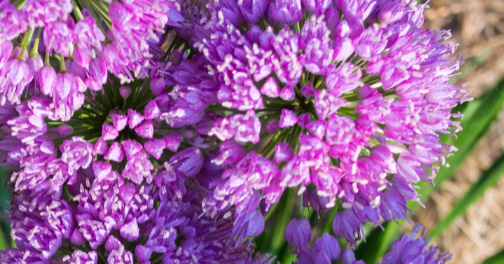
Allium is a genus of more than 700 species in the Amaryllidaceae (amaryllis) plant family. The best-known alliums are used for food, such as onion, shallot and scallion, garlic, leek and chives.
When planted in the fall, ornamental alliums normally flower the following spring. Additionally, spring-planted alliums started from divisions or started plants tend to flower the first year. Most alliums flower in May, June or early July, depending upon species. After flowering, the foliage dies back, leaving a dormant underground bulb behind.
Probably the best-known ornamental allium is giant onion. This plant produces a round flower head (or umbel) of violet flowers on flower stalks (scapes) that can reach 6 feet in height. The flower heads are about six inches in diameter and are spectacular in the garden.
‘Globemaster’ is an interspecific hybrid with flower heads ranging in size from a softball to a volleyball. Originally developed in Holland as a cut flower, ‘Globemaster’ is reliable and makes a powerful statement in the garden, Trinklein says.
‘Purple Sensation’ is an attractive cultivar that produces purple, starlike florets tightly packed into a round flower head about the size of a grapefruit. Scapes of ‘Purple Sensation’ reach about 3 feet high. Flowers tend to appear early in the growing season.
‘Star of Persia’ produces pale purplish-blue flower heads up to10 inches in diameter with star-shaped florets. Florets tend to be more sparsely packed than those in other large-flowered alliums. Scapes are about 2 feet tall.
Not all alliums are large. Drumstick allium produces an abundance of reddish-purple, cone-shaped flowers with flower heads a bit over 2 inches in diameter on scapes about 20 inches.
Several alliums grow to a height of only 8-12 inches, making them more suitable for planting in the front of a border or used as an edging. The culinary herb Allium schoenoprasum, or chives, is one. Its pinkish-purple flower heads average about an inch in diameter and are borne on scapes about 15 inches. Its hollow, grass-like leaves often are used for a variety of culinary purposes.
Golden garlic is a small plant that produces bright yellow flowers and is suitable for a rock garden or for naturalizing. It reaches a height of about 12 inches and is one of the few alliums with yellow flowers.
‘Blue Eddy’ is another small ornamental allium selected from the species Allium scenscens. Its name reflects the bluish hue of its somewhat twisted foliage. It produces small lavender-pink flower heads about 1.5 inch in diameter on 12-inch scapes.
Perhaps the most popular ornamental allium is ‘Millenium,’ a cross between Allium nutans and A. lusitanicum. Selected for its compact growth habit and abundance of rose-purple flower heads, ‘Millenium’ tends to bloom later in the season than other alliums for extended color in the garden.
Alliums need abundant direct sunlight to thrive. Well-drained soil also is a must, especially during the winter. If garden soil is heavy, incorporate organic matter to improve drainage. Alliums planted in poorly drained soil tend to be short-lived. Considered drought-tolerant, most alliums require infrequent watering and should be grown on the dry side.
Alliums are virtually pest-free and seem to be shunned by both deer and rodents. The flowers of allium are very attractive to pollinators, especially bees and butterflies.
Alliums need occasional rejuvenation through division. In late summer, after leaves die back, carefully lift the clump of bulbs with a spade or garden fork. Remove small outer bulblets and grow them in flowerpots for additional plants in future years. Carefully separate the remaining bulbs and discard any that are damaged. Replant some sound bulbs in the same spot and find new homes for the rest.