
JEFFERSON CITY – Following hundreds of life-saving water rescues during historic flash flooding in south central Missouri, Governor Mike Kehoe praised the extraordinary efforts of local and state emergency responders and the Missouri National Guard. As much as 12 inches or more of rain fell within a matter of hours, beginning overnight in the areas of Crawford, Iron, Madison, Reynolds, and Wayne counties, resulting in a 1-in-1,000-year rainfall event in some of these locations.
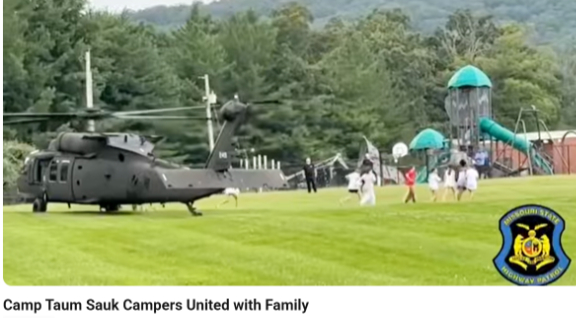
See video below
“Missouri’s first responders once again answered the call with extraordinary bravery, professionalism, and compassion, rescuing hundreds of Missourians from dangerous floodwaters,” said Governor Kehoe. “As recovery efforts continue and additional rain is expected, I urge everyone in flood-prone and low-lying areas to stay weather-aware, have multiple ways of receiving alerts, and be ready to take protective action.”
Historic flash flooding prompted over 200 water rescues throughout the region, with first responders rescuing individuals from floodwaters, trees, rooftops, and stranded vehicles.
Governor Kehoe activated the Missouri National Guard, which safely air evacuated 202 children and counselors stranded by floodwaters from Camp Taum Sauk in Lesterville. Eight UH-60 Black Hawk helicopters staffed by approximately 35 crewmembers flew the campers to the Aracadia Valley Elementary School, where they were safely met by first responders and reunited with their families. A video of the re-unification may be found here:
https://youtu.be/Zua-n6olki0?si=__ZADdULZaC97ba7
“This effort reflects the very best of our state emergency response teams,” Governor Kehoe said. “Countless men and women, across multiple jurisdictions, have been working around the clock with one mission in mind: saving lives. We are grateful for their service and will continue supporting communities as response and recovery efforts move forward.”
The Governor also activated Missouri Task Force 1 (MO-TF1), the state’s Urban Search and Rescue team, to assist in the rescue efforts. MO-TF1, alone, participated in over 100 rescues and has increased its deployed presence to 78 personnel.
As the Black River continues to rise, it is forecast to crest at a record level of more than 28 feet near Annapolis. Currently, a woman from Crawford County is the only confirmed person who is unaccounted for.
Evacuations of individuals who are stranded by high water but not endangered are continuing. The Missouri State Highway Patrol’s Troop G is the point of contact for any citizen who needs to report missing persons related to the flooding at 417-469-3121.
The State Emergency Management Agency (SEMA) and state response agencies continue to monitor the ongoing severe weather system overnight in coordination with the National Weather Service. The State Emergency Operations Center remains activated at a Level 3 with SEMA operations, planning, and emergency human services staff, and emergency support partners from the Highway Patrol, MoDOT, Missouri National Guard, Missouri Division of Fire Safety, Missouri Department of Natural Resources, Missouri Department of Conservation, and Missouri Task Force 1 to assist with resource coordination and any requests for assistance.
Missourians, particularly those on or near rivers and streams, should stay aware of local forecasts, follow official warnings, and ensure they have multiple ways to receive alerts, including overnight, as weather conditions change rapidly. Never attempt to drive through floodwaters, even if the water appears shallow. Just six inches of floodwater can sweep a person off their feet, and as little as one foot of water can move most cars off the road. More than half of flood deaths in Missouri are victims in vehicles. Nighttime severe weather is particularly dangerous because visibility is severely reduced. If you find yourself stranded by floodwaters, immediately call for help and seek higher ground.
Some roadways in the area are closed because of flooding or damage created by the flooding. Check the Missouri Department of Transportation’s Traveler Map before traveling.
Some Missouri State Parks and private campgrounds have closed because of the flooding. Before traveling, people can check the State Parks and Sites Status Map for the most up-to-date information.