
COLUMBIA, Mo. – A small, hard-to-spot insect is making a big entrance in Missouri.
The Asian needle ant, with its painful sting and potential impacts on both people and forests, has now been confirmed in the state. For many Missourians, including University of Missouri Extension urban entomologist Emily Althoff, it was a relatively unfamiliar name until recently.
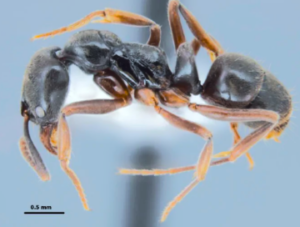
Althoff first came across the insect while monitoring national news coverage on emerging insect issues in last year. Curious about its growing attention, she began digging deeper.
Native to parts of East Asia, the Asian needle ant was first detected in the United States in the 1930s along the East Coast. Since then, it has quietly expanded its range and is now found across nearly half of the continental U.S.
Despite its spread, the ant often goes unnoticed.
“It’s very inconspicuous,” says Althoff. But its impact can be anything but small.
The Asian needle ant can deliver a painful sting that, in rare cases, may trigger severe allergic reactions like those caused by bees or wasps. It also poses a threat to native ecosystems by outcompeting local ant species that play important roles in seed dispersal.
Its feeding habits add another layer of concern. The ant preys primarily on termites. That might seem like a good thing, but termites are essential to breaking down fallen wood in forests. Without them, dead trees can accumulate, potentially increasing the amount of fuel available for wildfires.
Althoff began tracking the ant more closely in fall 2025 after it was reported just across Missouri’s southern border in Arkansas. Using the community science platform iNaturalist, she monitored possible sightings and collaborated with state and federal partners, including the USDA, U.S. Forest Service, Missouri Department of Agriculture and Missouri Department of Conservation, to confirm its presence in Missouri.
Her work is now focused on identifying where else the ant may be found in the state and helping Missourians recognize it and understand its potential risks.
You can follow records of the species at https://antmaps.org.
If you think you spot one, send a good-quality photo to your local MU Extension center or contact Althoff at emilyalthoff@missouri.edu.
You can also learn more about Asian needle ant and other insects at Althoff’s Bug Beat YouTube videos. See “Asian Needle Ant: What You Need to Know.”