
JEFFERSON CITY – As Missourians shovel snow and huddle indoors against the February cold, earthquakes are among the last things they’re thinking about. But that’s the point of Missouri Earthquake Awareness Month, which is observed across the state each February.
“A major earthquake for Missouri is what’s known as a “high-impact, low-frequency” event, which is why most people don’t think about them at all,” said “But these types of natural disasters – unpredictable, but with the potential for catastrophic consequences when they do occur – require training, planning, exercises and building resilience in the emergency management, business and transportation sectors. We urge residents to consider their preparedness as well.”
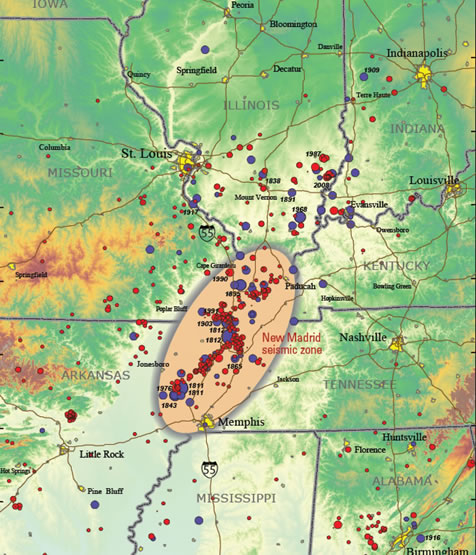
Earthquakes warrant special attention in Missouri because of the presence of the New Madrid Seismic Zone, in southeast Missouri, which in 1811-12 generated some of the most powerful earthquakes to ever jolt the U.S. Buildings were destroyed, church bells rang hundreds of miles away and the Mississippi River briefly flowed backward.
The NMSZ is still active, with an average of over 200 tiny earthquakes, most of which can’t be perceived, each year. Experts estimate there is a 25-40% chance of a large earthquake occurring in the next 50 years.
Here are some of the steps Missourians, particularly those in southeast Missouri, should consider:
- Know “Drop, Cover and Hold On” if an earthquake occurs. Get under a table or desk, drop to your knees, cover your head and hold on until the shaking stops. Falling debris is the most common cause of injury in nations with modern building codes.
- Put together an emergency kit to last at least several days, including a flashlight, first aid supplies, portable radio, drinking water, canned and dry food and blankets. These kits are essential for all types of disasters, when services could be disrupted for days.
- In active earthquake zones, it’s also important to prepare by taking simple safety steps before an earthquake occurs:
- Bolt bookcases to wall studs, install strong latches on cupboards and secure your home’s water heater. If it tips over, it could start a fire or gas leak.
- Secure overhead lighting fixtures and move heavy objects from high shelves to lower ones. Injuries can be caused by this type of falling debris.
- Develop a family communication plan. Identify a relative living at least 100 miles away that everyone can call to check in and tell family you’re safe.
- Know how to turn off your gas and water.
- Find out if your house is covered for earthquake damage. Most homeowner insurance does not include earthquake coverage – it must be purchased separately. According to the Missouri Department of Commerce and Insurance, in the seven counties most at risk along the NMSZ fault line, the number of homes with earthquake insurance dropped from 60% in 2000 to 10% in 2024.
Resources for families, schools and businesses are available on SEMA’s Earthquake Preparedness website, including factsheets, interactive maps and informational videos that explain what to do in the event of an earthquake.