
JEFFERSON CITY – The Missouri Prairie Foundation’s Grow Native! program offers a native plant care calendar to guide your native landscaping stewardship each season, keeping it attractive to you and also providing benefits to wildlife throughout the year.
This means during winter too! Don’t fear the cold—native garden winter care activities will warm you up, and you may notice things you don’t see during the growing season. Here are wintertime native gardening tips from the Grow Native! Program:
- Leaving spent stalks of grass and wildflower stalks standing in winter provides cover, food, and nesting material for wildlife. If you choose to trim a significant amount of spent vegetation, instead of cutting flush to the ground, trim to 8 to 22 inches high so that the following growing season, native bees that nest in stems can lay eggs in them. Brush piles and stumps provide habitat for many overwintering creatures.
- If leaves continue to fall from trees in winter, leave them where they fall into flower beds, where they provide shelter for moth cocoons and other overwintering creatures.
- If you planted trees and shrubs last fall, continue watering as necessary through winter drought periods. Many tree root systems continue growing until the ground freezes solid. Throughout the winter, the ground may freeze and thaw multiple times, and during these thaw cycles, roots continue taking up moisture. If adequate precipitation (less than 1 inch of rain or snow) has not occurred for a week, use a hose (or watering can) and soak the soil around each newly planted shrub and tree, pausing over the roots for at least 10 to 20 seconds. This small contribution of moisture will yield a tenfold reward when the tree buds open in spring.
- Winter is ideal for tree pruning. The lack of leaves reveals the branching structure, making it easier to determine which branches to prune. Continue pruning trees, shrubs, and woody vines through late March before they leaf out in order to maintain the overall aesthetic appearance of the plant, rejuvenate the plant’s growth, or remove dead, dying, or crossing branches. Important: Pruning oaks during the early growing season creates seeping wounds that may invite deadly pathogens into the tree—if you need to trim an oak, always do so during the winter.
- Prune any branches in parking lots and sidewalks that interfere with public safety, but never prune more than 25 percent of live growth, or it could prove fatal to the specimen.
- Check horticulturist Scott Woodbury’s “Last Chance for Winter Tree Pruning” blog post and video here: https://grownative.org/2022/03/11/last-chance-for-winter-pruning/
- If you want to plant bare-rooted trees and shrubs during the dormant season, wait until the ground has thawed in February or early March.
- If burning grass clumps or prairie plantings, be mindful of local burning ordinances and the surroundings, especially buildings and overhead utility lines.
- Salt used for deicing streets, sidewalks, and parking lots can be harmful to landscape plants. You may wish to consult the Grow Native! list of salt-tolerant plants. Where possible, consider using sand instead of salt.
- Winter food shortages force rodents and deer to feed on bark, twigs, flower buds, and leaves, injuring and sometimes killing trees and shrubs. Protect young trees and sensitive plants from herbivory.
- In late February to early March, trim dead sedge foliage before plants leaf out in early spring.
Grow Native! is the 26-year-old native plant marketing and education program of the 60-year-old Missouri Prairie Foundation. Find the four-season Native Landscaping Care Calendar, an extensive, searchable gallery of native plants, list of native plant and seed suppliers, and many other native landscaping resources at www.grownative.org.
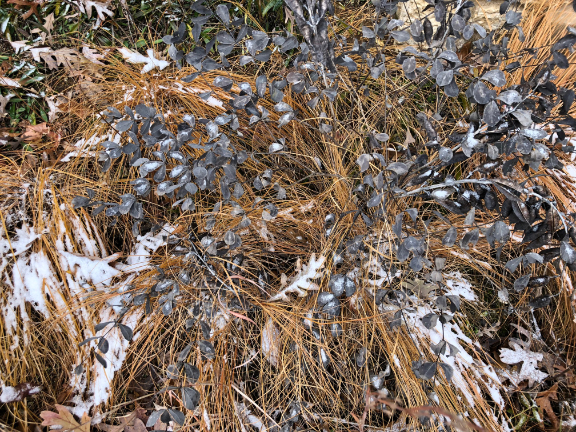
Photo Credit: Carol Davit
Leaving the spent leaves of native grasses and wildflowers in garden beds through the winter provides visual interest and shelter for overwintering creatures.
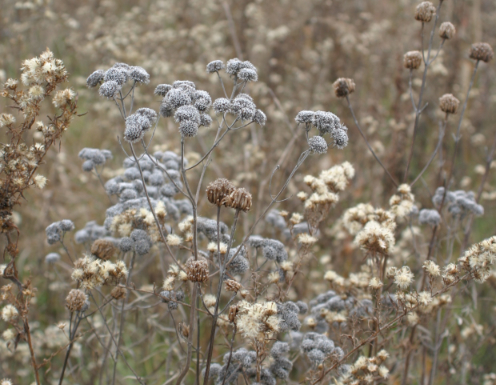
Photo Credit: Scott Woodbury
Standing spent stems of hairy mountain mint, New England aster, and wild bergamot provide visual interest in native garden beds throughout the winter.
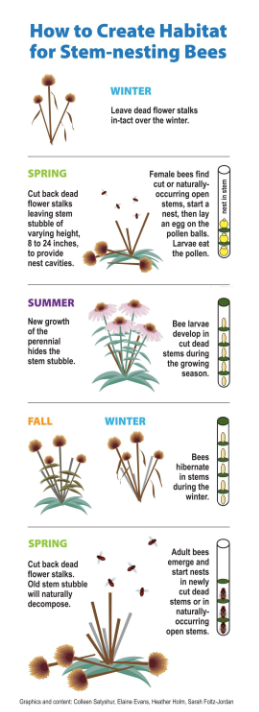
Photo Credit: Colleen Satyshur, Elaine Evans, Heather Holm, and Sarah Foltz Jordan

Photo Credit: Jamie Leahy
When native sedges resprout in late winter/early spring, trim the past year’s growth.
For more information: https://grownative.org/2026/01/21/winter-care-of-native-gardens/